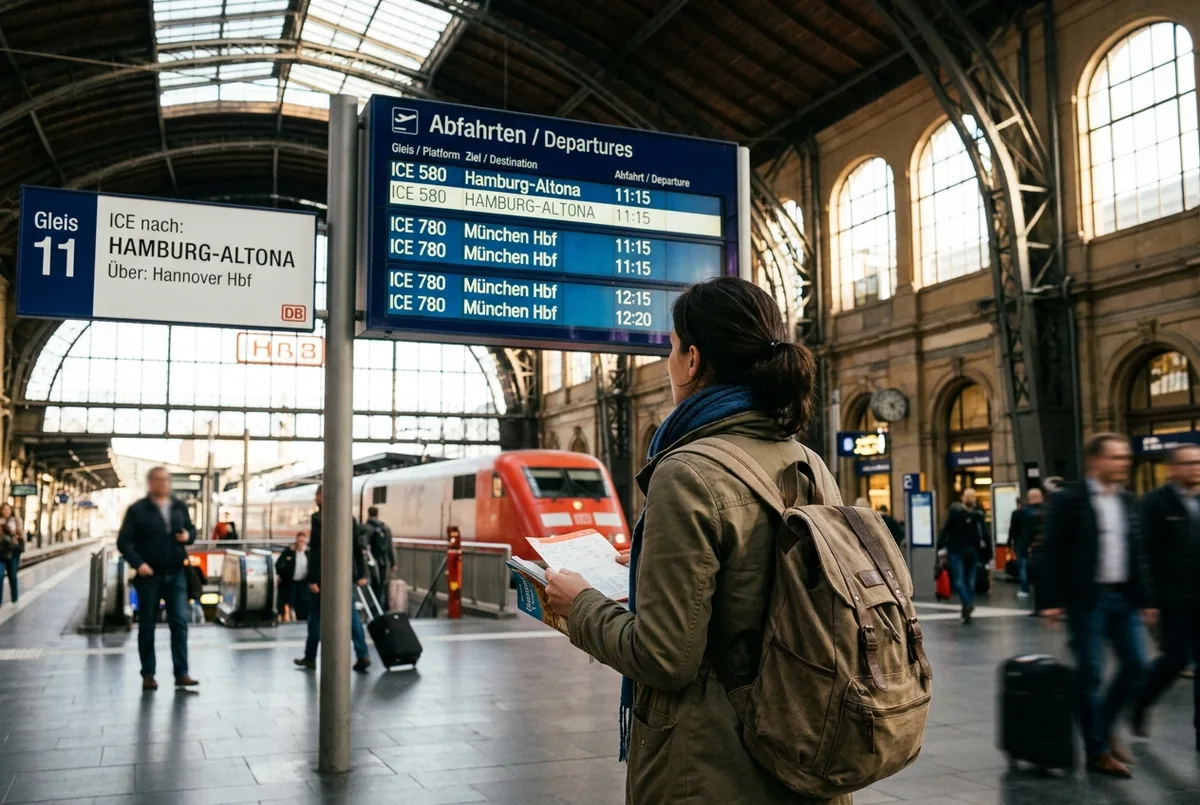
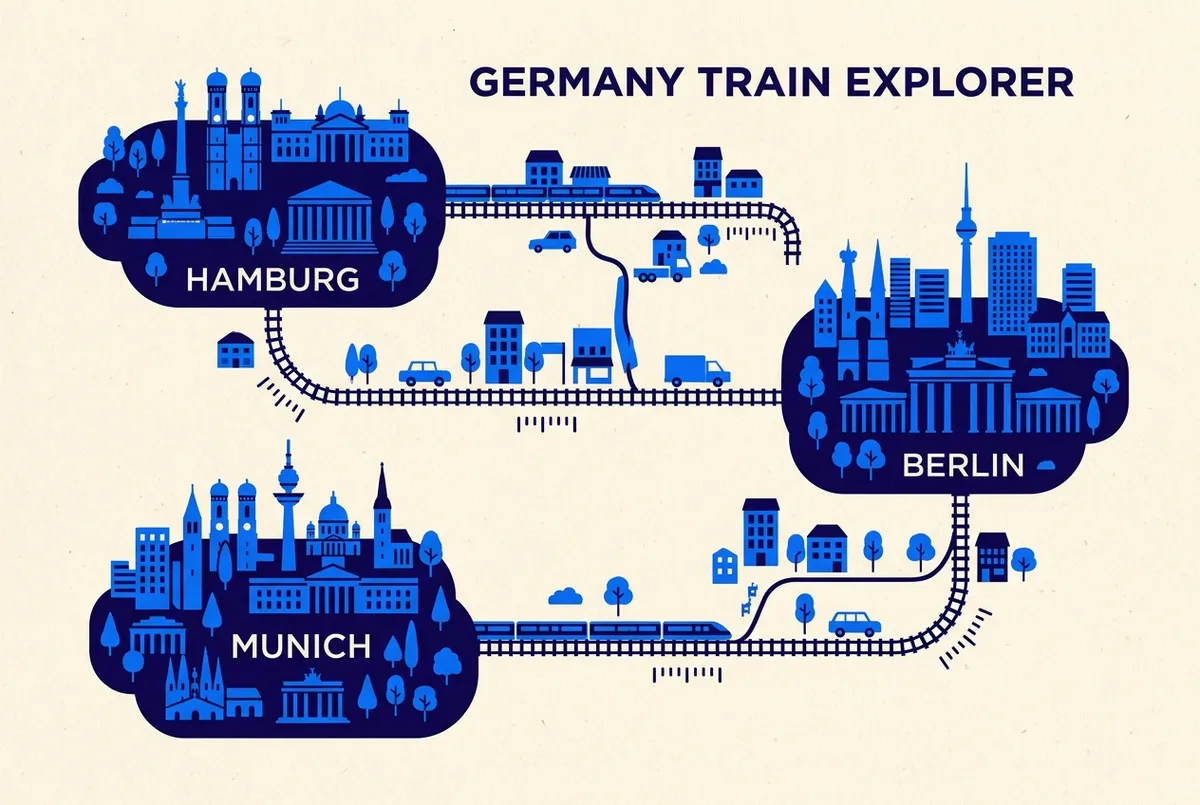
The distance from Munich to Hamburg is around 775 kilometres, which works out to roughly 6 hours on a direct ICE train or under an hour and a half by air. Here is what I would actually book depending on your trip: the train if you want a scenic, no-transfer journey with a reliable schedule, and a flight if that day is already tight on either end. For the wider case on why Hamburg is worth building a route to in the first place, my honest first-timer’s guide to visiting Hamburg covers that ground.
How far is Munich from Hamburg, and how long does the trip take?
About 775 km by road or rail, which translates to roughly 6 hours on Deutsche Bahn’s direct ICE service, or around 75 to 90 minutes in the air once you include boarding.
I would take the train over the flight unless your schedule is genuinely tight, since German high speed rail is comfortable, drops you right in the city centre at Hamburg Hauptbahnhof, and skips the extra time airport security and transfers add to a short domestic flight. Direct ICE trains run several times a day, so booking a specific slot a week or two ahead usually locks in a reasonable fare without much hassle.
Is it faster to fly from Munich to Hamburg instead?
In pure flight time, yes, a bit over an hour in the air beats a 6 hour train ride on paper. In practice the two options land closer together once you add airport transfers, check in, and security on both ends.
I would only pick the flight if you specifically need the morning or evening freed up, since by the time you account for getting to and from both airports, the total door to door time often comes out close to the train anyway. If budget matters more than speed, the train is usually the better value on this specific route.
How do you get from Berlin to Hamburg?
Berlin to Hamburg is a much shorter hop, roughly 290 km and under 2 hours on a direct ICE train, making it one of the easiest intercity routes in Germany.
I would treat this as a genuinely easy day trip distance if your main base is Berlin, short enough that the travel itself barely eats into your day. My honest verdict on a Hamburg day trip from Berlin weighs whether that round trip actually leaves enough time to see Hamburg properly, versus staying overnight instead.
Is there a ferry from the UK to Hamburg?
No, not a direct passenger ferry, at least not today. The direct UK to Hamburg crossing that older guidebooks sometimes reference has not operated for years, and I would not plan a trip around finding one.
I would stop searching for a direct sailing and look at the realistic alternatives instead: flying directly into Hamburg Airport from several UK cities, or taking a ferry to a nearby North Sea port and continuing overland. Neither route is a straight substitute for the old direct service, but both get you to Hamburg reliably.
Can you sail to Hamburg from the UK another way?
Yes, indirectly. The closest practical option is a ferry from the UK to a Dutch or Danish North Sea port, such as the Harwich to Hook of Holland or Newcastle area routes, followed by a train onward to Hamburg.
I would only choose this route if the sailing itself is part of the appeal, a slower, scenic way to reach northern Europe, rather than a genuinely faster or cheaper option than flying. For most travelers coming from the UK, I would book a direct flight into Hamburg Airport and save the ferry-plus-train combination for a trip where the journey itself is the point.
What is the quickest way to reach Hamburg from the UK?
A direct flight into Hamburg Airport, which several UK airports serve with short, under-two-hour routes, well ahead of any ferry and train combination on total travel time.
I would book this as the default unless you specifically want a slower overland or sea route for its own sake. Hamburg Airport sits close to the city centre and connects easily by train or taxi, so the door to door time from a UK departure gate to your hotel is genuinely competitive with flying into many other major European cities.
Does Hamburg have good rail connections once you arrive?
Yes, Hamburg Hauptbahnhof is one of Germany’s busiest stations, with strong onward connections across the country and into Denmark, making it a solid hub whether you arrived by air or by train.
I would use this to your advantage if your trip includes other German or Scandinavian stops, since Hamburg’s position makes it a genuinely convenient midpoint rather than a detour. Hamburg Hauptbahnhof’s own Wikipedia entry is worth a glance if you want a sense of just how large and busy this station actually is. My guide to the best day trips from Hamburg by train covers how far that same rail network reaches once you are settled in the city.
Where should you base yourself once you arrive in Hamburg?
Close to the water, in my view, since both Hamburg Hauptbahnhof and Hamburg Airport connect quickly to the Landungsbrücken and HafenCity area by train, and basing yourself there keeps the rest of your trip simple.
I would book a hotel near the harbour before worrying about anything else on the itinerary, since it puts the cruise piers, the Speicherstadt, and most of the sights worth a first visit within easy walking distance. My guide to where to stay in Hamburg, including areas to avoid covers the trade-offs between neighbourhoods in more depth.
Does arriving by cruise ship change any of this?
Yes, significantly. Cruise passengers arrive directly at one of Hamburg’s dedicated terminals rather than the main train station or airport, with a much shorter window ashore to work with.
I would treat that as its own planning problem rather than apply the train and flight advice above, since a cruise call usually means a single day rather than a multi-day visit. My complete guide to Hamburg’s cruise port covers terminal locations, getting into the city centre, and how to make the most of a short shore day.
Is Hamburg worth the travel time from further afield?
Yes, in my opinion, especially if your route already passes anywhere near northern Germany or Scandinavia, since few other stops combine a working port, old warehouse canals, and a central lake in one city.
I would make the detour rather than skip it purely because the distance looks long on a map, since German and Scandinavian rail links make the actual journey easier than the raw kilometres suggest. My budget guide to visiting Hamburg is worth a look too once travel is sorted, so the rest of the trip’s costs do not come as a surprise.
My recommendation
If you only read one section, read this: take the direct ICE train from Munich if you have the time, or fly if your schedule is tight, and from the UK, book a direct flight into Hamburg Airport rather than hunting for a ferry route that no longer runs. I would not let the UK ferry question delay your planning, since flying is genuinely the simpler answer here. Once you land, my full comparison of Hamburg’s harbour cruises and tickets is where I would start settling into the city, since the harbour cruise is the single activity that makes the rest of a Hamburg trip click into place.
Frequently asked questions
How long does the train from Munich to Hamburg actually take?
Direct ICE services typically run close to 6 hours, though exact timing varies by specific train, so I would check Deutsche Bahn’s timetable for the day you are travelling rather than assume a fixed figure.
Is there a direct flight from the UK to Hamburg?
Yes, several UK airports run direct flights to Hamburg Airport, typically under two hours in the air, making it the fastest practical option from the UK.
Did a ferry from the UK to Hamburg ever exist?
An older direct service did operate in the past, but it is no longer running, and I would not plan a current trip around finding one.
Is the train from Berlin to Hamburg worth it for a day trip?
Often yes, since the journey is under 2 hours each way, though I would still weigh the total round trip time against how much of Hamburg you actually want to see in one day.
Do you need a car to get around once you reach Hamburg?
No, I would avoid renting one entirely. Hamburg’s train, bus, and ferry network covers the city and its surroundings well enough that a car usually adds parking hassle rather than convenience.