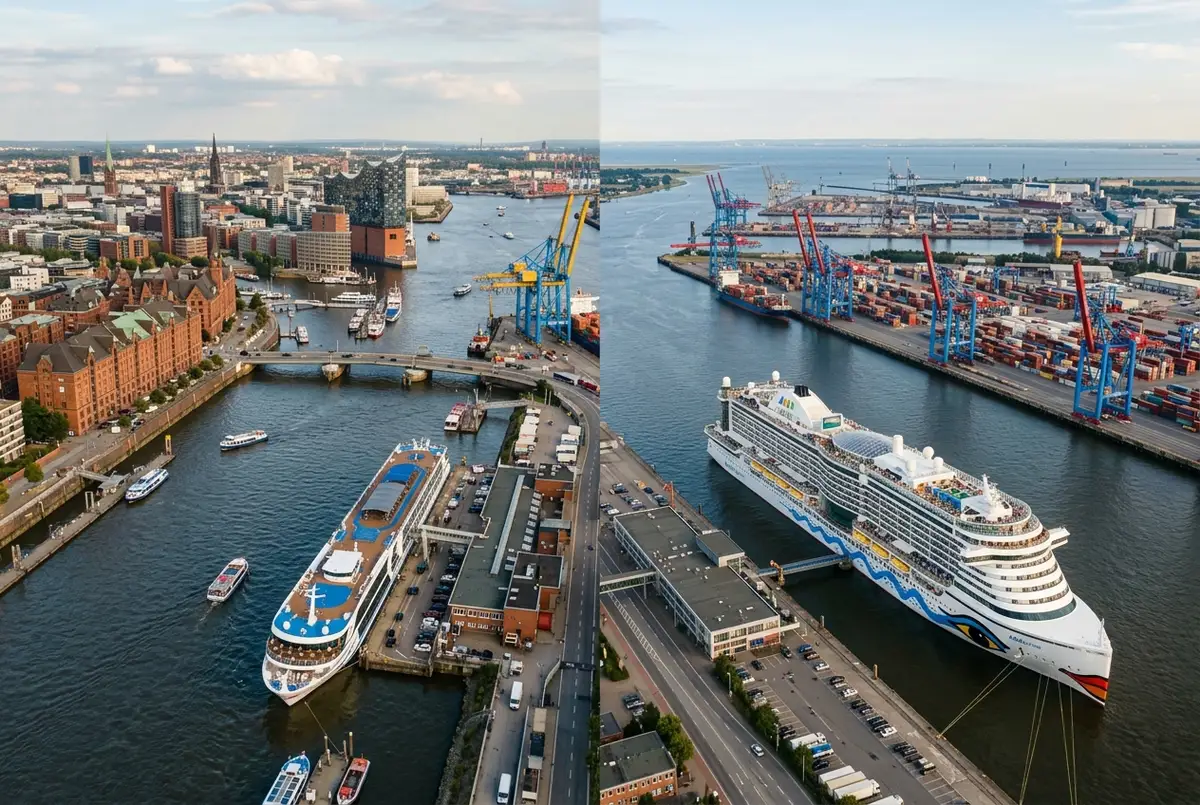
Cruise ports in germany usually means a choice between four real options: Hamburg, Kiel, Bremerhaven and Warnemünde, each built around a different kind of itinerary. Here’s what I’d actually weigh first: whether your route is a river port city break or a Baltic or North Sea embarkation, since that single factor narrows the choice faster than any ranking I could give you. This page compares all four honestly, including where Hamburg is not the strongest option.
How should I actually decide between Germany’s cruise ports if I have a choice?
Start with the itinerary’s purpose rather than a general ranking. A Scandinavian or Baltic focused cruise naturally favours Kiel or Warnemünde as embarkation points, while a single day call built around sightseeing in one dense city favours Hamburg, and a maritime history focused stop favours Bremerhaven.
I would not try to find one objectively best German cruise port, since the honest answer depends entirely on what kind of day you actually want. Someone chasing open sea scenery and a quick Baltic crossing wants something different from someone who wants a full city’s worth of sights packed into a single afternoon, and comparing the two directly misses the point of either trip.
What are the main cruise ports in Germany?
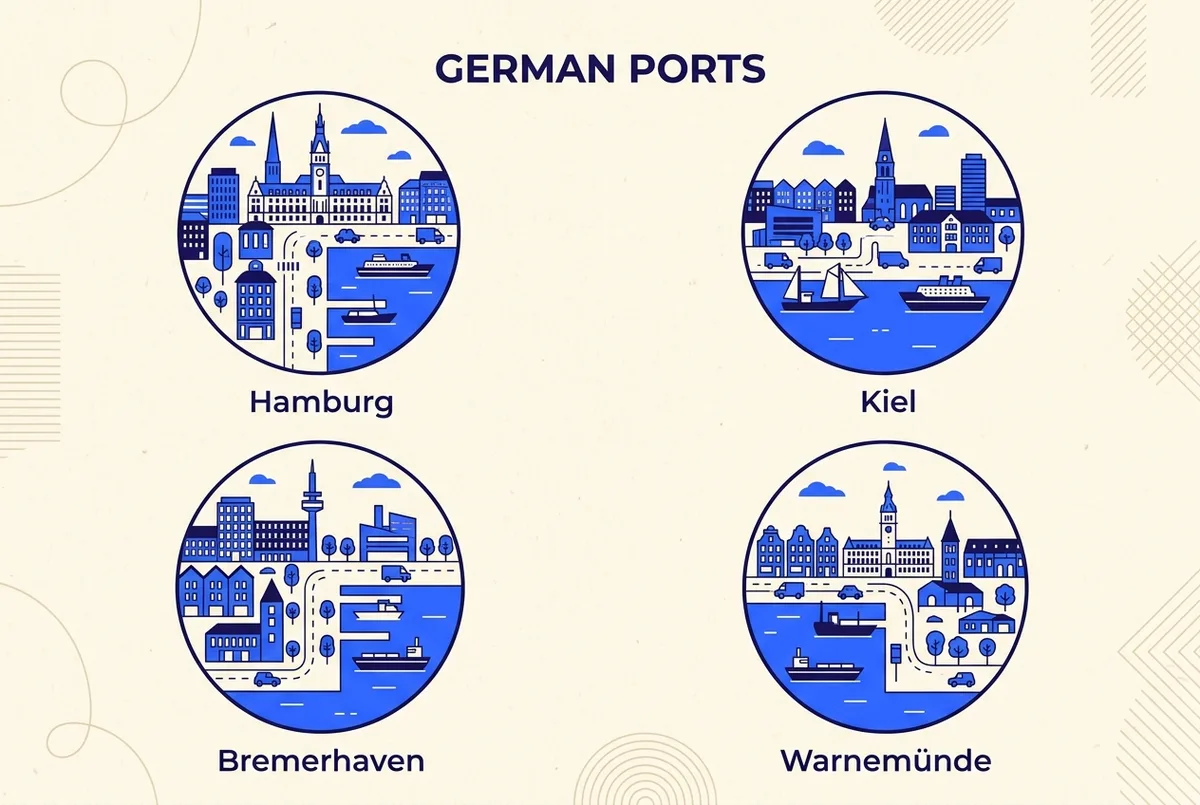
Hamburg, Kiel, Bremerhaven and Warnemünde, part of Rostock, are the four cruise ports in Germany that handle the large majority of the country’s cruise traffic, each specialising in a different kind of route.
I would not treat these as interchangeable. Hamburg sits on the Elbe river rather than the open sea, Kiel and Warnemünde face the Baltic and serve Scandinavian routes, and Bremerhaven sits on the North Sea coast. My full Hamburg cruise port guide covers the city’s own terminals in depth if Hamburg is your confirmed port of call.
Is Hamburg or Warnemünde a bigger cruise port?
Warnemünde is generally the busier of the two by passenger volume, since it sits directly on the Baltic coast and serves as a natural gateway for Scandinavian and Baltic cruise itineraries without the longer river approach Hamburg requires.
I would not read busier as better though. Warnemünde’s own town is smaller and quieter than Hamburg’s city centre, which some travellers prefer and others find thin on things to do beyond the port itself. The Warnemünde district’s own Wikipedia entry is a reasonable starting point if that port is on your itinerary.
Why does Hamburg take longer to reach than Germany’s coastal ports?
Hamburg sits well inland along the Elbe river rather than directly on open water, which means ships add real sailing time to and from the berth on either side of a Hamburg call compared with a coastal port like Kiel or Warnemünde.
I would factor this into how your overall itinerary feels, not just the Hamburg day itself, since a longer river approach can mean less flexibility elsewhere on the schedule. What that extra sailing time buys you, in my view, is access to one of Europe’s largest working harbours and a city centre most coastal German ports simply cannot match for density of things to do. My comparison of a typical Hamburg call day’s schedule explains how to check your own confirmed timing rather than assume a fixed transit time.
What makes Kiel different from Hamburg as a cruise port?
Kiel serves primarily as an embarkation port for Scandinavian and Baltic cruises rather than a single day call, sitting directly on the Kiel Fjord with quicker open water access than Hamburg’s river approach.
I would pick Kiel over Hamburg specifically if Scandinavia is the main draw of your cruise, since it shaves real time off the start and end of a Baltic itinerary. For a city break style single day call focused on one destination’s own sights though, I would rank Hamburg ahead of Kiel for sheer density of things to see within a short walk of the water.
What makes Bremerhaven worth comparing to Hamburg?
Bremerhaven sits on Germany’s North Sea coast and is known for maritime history attractions including emigration and shipping heritage sites, giving it a genuinely different character from Hamburg’s working harbour and warehouse district focus.
I would recommend Bremerhaven to anyone whose main interest is maritime history museums specifically, since that is where the port’s own sights are strongest. For a broader single day visit with more variety, old town streets, canals, a modern concert hall waterfront and the harbour itself, I would still rank Hamburg ahead on balance. My port of Hamburg history and facts page covers what makes Hamburg’s own maritime story distinct.
Which German cruise port gives you the most to do in a single short day?
Hamburg, in my honest opinion, simply because its old town, the Speicherstadt warehouse district, the modern Elbphilharmonie waterfront and the working container port all sit within a short distance of each other and of at least one cruise terminal.
I would not claim this holds for every traveller’s priorities though. If Scandinavian scenery or a quieter coastal town is what you actually want from a shore day, Kiel or Warnemünde may suit you better than a dense city like Hamburg. My page on the best shore excursions for a short Hamburg call lays out exactly how I would spend a single day if Hamburg is your confirmed port.
Is one of these German cruise ports better for passengers with mobility concerns?
Hamburg and Kiel both have relatively flat waterfront areas near their terminals, while a historic district further into any of these cities can involve cobbled streets that are harder going for anyone with limited mobility.
I would check the specific terminal and planned route for your own port rather than assume one city is universally easier than another, since the comparison depends heavily on exactly where your ship docks and how far you intend to venture from the pier. A seated activity like a harbour cruise tends to be the easier option across all four ports, since boarding is usually a short, level walk and the sightseeing itself happens from a seat rather than on foot.
Does the cruise terminal location affect which German port feels busiest?
Yes, somewhat. Hamburg’s two terminal locations, HafenCity and Steinwerder, sit at different distances from the city centre, so the port can feel more or less convenient depending purely on which berth your specific sailing uses.
I would check this detail for Hamburg specifically before comparing it to a simpler single terminal port like Kiel or Bremerhaven, since terminal assignment can change how fair a side by side comparison actually is. My page on Hamburg’s two cruise ship terminals explains exactly what each location means for your shore day. My guide to getting from the terminal into the city covers the actual transfer routes once you know your berth.
Do these German cruise ports differ much in how expensive they feel?
Not dramatically, in my experience comparing shore excursion pricing across German ports generally, though a dense city like Hamburg offers more free or low cost options, a walk through the old town or along the harbour, than a smaller coastal town where paid activities carry more of the day.
I would factor this into your overall budget expectations rather than your port choice itself, since the real cost driver on any shore day is usually the paid excursions you choose, not the city you happen to be visiting. A single well chosen activity, rather than several smaller paid stops, tends to keep the day’s cost reasonable regardless of which German port your ship calls at.
My recommendation
If you only read one section, read this: choose based on your itinerary’s route first, Baltic embarkation favours Kiel or Warnemünde, maritime history favours Bremerhaven, and a dense single day city visit favours Hamburg. For that last case specifically, I would anchor the day around a Hamburg Harbor and Speicherstadt Day Cruise, since it is the single activity that best captures why Hamburg earns its spot on this list. My full lineup of hamburg boat tours and tickets covers the other formats if that specific cruise is not the right fit for your day.
Frequently asked questions
Is Hamburg the biggest cruise port in Germany?
Not by passenger volume. Warnemünde generally handles more cruise traffic, though Hamburg offers a denser city centre and more varied sightseeing within a short distance of its terminals.
Which German cruise port is best for Scandinavian cruises?
Kiel, since it sits directly on open water with quicker access to Baltic and Scandinavian routes than Hamburg’s longer river approach.
Can I do a day trip between Germany’s cruise ports?
Generally no, these ports sit far enough apart that travelling between them within a single shore day is not realistic, so I would plan your activities around whichever single port your ship actually calls at.
Does Hamburg have more things to do than Germany’s coastal cruise ports?
In my view, yes, thanks to its dense old town, warehouse district and working harbour all within a short distance of the water, though a coastal port like Kiel or Warnemünde may suit a traveller who prefers a quieter, smaller town.
Can I compare prices across Germany’s different cruise ports before booking an excursion?
Pricing varies by operator and activity rather than by port alone, so I would compare specific excursions directly on whichever port your itinerary actually includes rather than try to rank entire ports by cost.