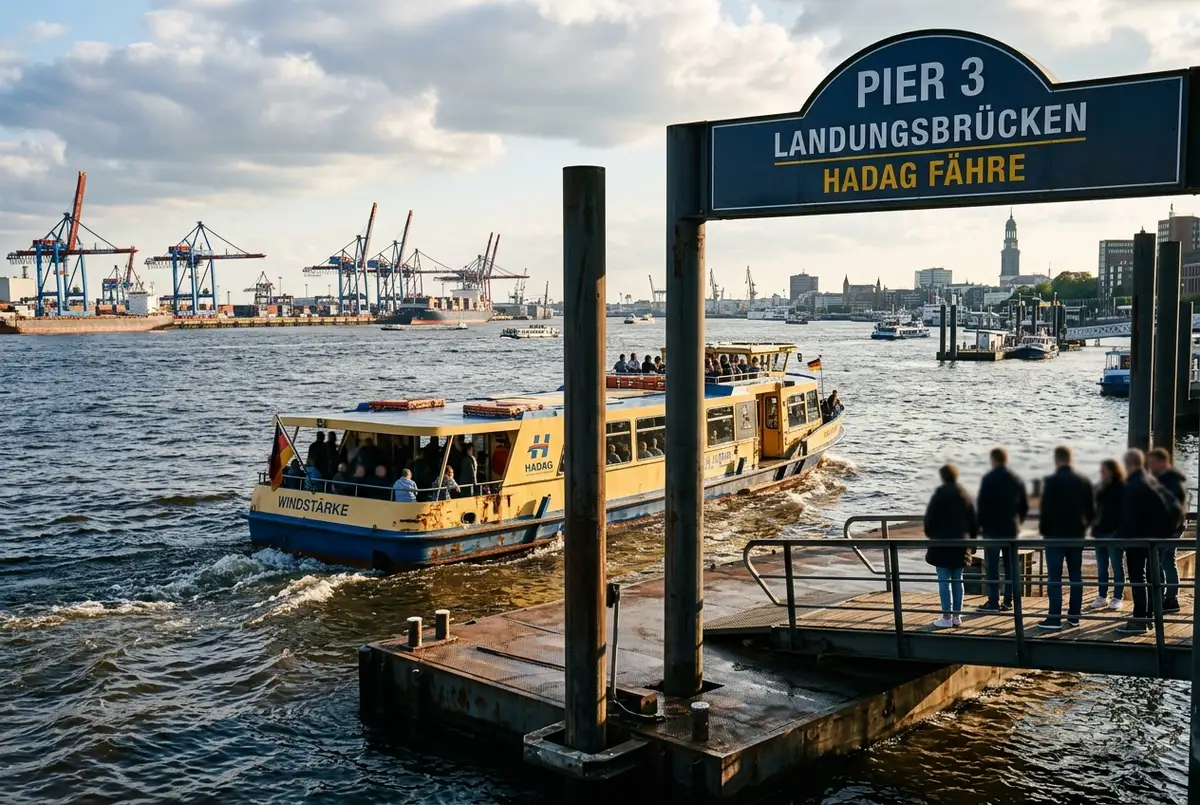
Hamburg ferry routes run as a handful of numbered HADAG lines along the Elbe, connecting piers from the city centre out toward Finkenwerder and the western harbour suburbs, with every route covered by a standard HVV transit ticket. Here’s what I’d actually do before relying on any schedule you find in a blog post, mine included: pull up the HVV app for today’s real departure times, since a printed table online is the first thing to go stale on a page like this. If a paid, narrated hamburg boat tour is what you actually want rather than a plain crossing, the homepage rundown of every Hamburg boat tour and ticket is the better starting point.
How is the Hamburg ferry network laid out?
HADAG operates its ferry lines out from piers along the Landungsbrücken and Überseebrücke waterfront, fanning out across the Elbe to serve both sides of the river and the harbour’s working districts. The network exists primarily to move commuters and residents rather than tourists, even though the routes pass genuinely scenic stretches of water.
I would think of it less as a tourist boat system and more as the harbour’s equivalent of a tram network, point to point, frequent, and entirely unconcerned with sightseeing value. That said, the fact that it serves real neighbourhoods is exactly why the views end up interesting, since the routes follow where people actually live and work rather than a route designed for cameras.

Which ferry line is best known among visitors?
Line 62, running between Landungsbrücken and Finkenwerder, is the route most commonly pointed to as worth riding for the view, since it crosses open water past the shipyards rather than hugging a single short stretch of pier.
I would pick this one first if I only had time to try a single ferry crossing out of curiosity. It gives a decent look at the working harbour for the price of a normal transit fare, even though, as with every HADAG line, you get no commentary explaining what you are passing.
How often do Hamburg ferries run?
Frequency varies by line and time of day, but most HADAG routes run on a regular interval throughout the day, closer together during commuter rush hours and spaced further apart in the evenings and on weekends.
I would not try to memorise exact minute intervals here, because they shift between summer and winter timetables and between weekday and weekend service. What I would do instead is treat the ferries like any other HVV line: check the live departure board or app rather than assume a fixed gap between boats.
Peak commuter windows, roughly the early morning and late afternoon on weekdays, tend to see the tightest gaps between boats on the busier lines, since that is when the network is actually carrying workers rather than the occasional curious tourist. Midday and weekend service thins out noticeably, which I think catches people off guard if they assume a city this size runs ferries on a constant, tourist-friendly interval the way a hop on hop off bus might.
Where can I check the current HADAG ferry schedule?
The most reliable source is the HVV’s own journey planner, since HADAG ferries are fully integrated into the city’s public transport system and show up alongside bus and train departures for the same stop.
I would always check there rather than rely on a fixed timetable published anywhere else, including this page, since HVV updates its live departure data directly while a printed schedule online can be months or years out of date by the time you read it. HVV, Hamburg’s public transport authority, publishes current departure times for every ferry pier through its own app and website.
Are HADAG ferries covered by the Hamburg Card or a day ticket?
Yes, since the ferries run inside the HVV network, any valid HVV ticket, including a day pass or the transport allowance bundled into the Hamburg Card, covers the fare the same way it covers a bus or U-Bahn ride.
I would always buy a day ticket if I planned more than two or three transit rides in a day anyway, which makes an occasional ferry crossing effectively a free bonus rather than a separate cost to budget for.
Do the ferries carry bikes or luggage?
Most HADAG ferries allow bikes on board, usually for a small supplementary fare, which makes them a popular option for cyclists crossing the Elbe rather than looping around by road or U-Bahn.
I would check the specific line’s bike policy before boarding with one though, since capacity on a smaller ferry can fill up fast during commuter hours. Luggage is generally fine in reasonable amounts, but I would not expect dedicated storage the way a cruise boat might offer, since these are transit vessels built for a short, standing-friendly ride.
Should I take a ferry instead of a harbour cruise for sightseeing?
Only if you want a cheap, unexplained glimpse of the water rather than an actual sightseeing trip. A ferry crosses some of the same river as a cruise, but with zero narration, no detour into the Speicherstadt canals, and no stop built around a view.
I would treat a ferry ride as a nice bonus on a day that already includes other plans, not as a substitute for a real cruise if seeing Hamburg’s harbour properly is the actual goal. My full page on how Hamburg ferries and tourist cruises differ goes deeper into exactly where that line sits and which one suits which kind of day, and my guide to harbour cruise departure points and timing covers the equivalent practical details for the paid cruise side once you have decided that is what you want.
HADAG’s own announcements and signage are in German, matching the fact that this is a domestic transit service rather than a tourist product, so do not expect English narration or English-language schedule boards at most piers.
I would lean on the HVV app for this instead, since its journey planner interface works in English and will show you ferry departures the same way it shows every other transit option, without needing to read a German-only timetable at the pier itself.
My recommendation
If you only read one section, read this: use the Hamburg ferry network for what it is, a cheap, frequent way to cross the Elbe or catch a glimpse of the harbour, and check the HVV app on the day for exact times rather than trusting any fixed schedule, including the general guidance on this page. I would ride line 62 once out of curiosity if you have a spare twenty minutes and a transit ticket already in hand, but I would not plan a dedicated sightseeing afternoon around the ferry network alone. My guide to what getting to the ferry piers by public transport actually involves covers the practical side of reaching the main piers, and my page comparing ferries to tourist cruises is where I would go next if commentary and a proper sightseeing route matter more to you than price.
Frequently asked questions
What does HADAG stand for?
HADAG is the Hamburg ferry operator’s name, short for Hamburgische Dampfschiffahrts-Gesellschaft, and it has run passenger boats across the Elbe for longer than almost any other transit service in the city.
Do Hamburg ferries run late at night?
Service thins out considerably in the evening and stops earlier than the daytime schedule on most lines, so I would not count on a late-night ferry crossing the way you might rely on a night bus.
Is there a ferry that goes all the way to the North Sea?
No, HADAG’s routes stay within the Hamburg harbour and the Elbe near the city, not out toward the North Sea coast, so a ferry will not substitute for a longer river or coastal trip.
Do I need a separate ticket for each ferry line?
No, a standard HVV fare for the relevant zone covers any ferry line the same way it covers switching between a bus and a train, as long as the ticket is valid for the zones you are crossing.
Can I ride a Hamburg ferry round trip just for the view?
Yes, nothing stops you from riding a line out and straight back on the next departure, which is exactly how I would treat line 62 if sightseeing on a budget is the goal for that hour.
Will the ferry schedule change between summer and winter?
Yes, HADAG typically runs a fuller summer timetable with more frequent departures on the busier lines, then trims back service in the winter months, which is another reason I would always check the live app rather than a fixed date on a printed schedule.